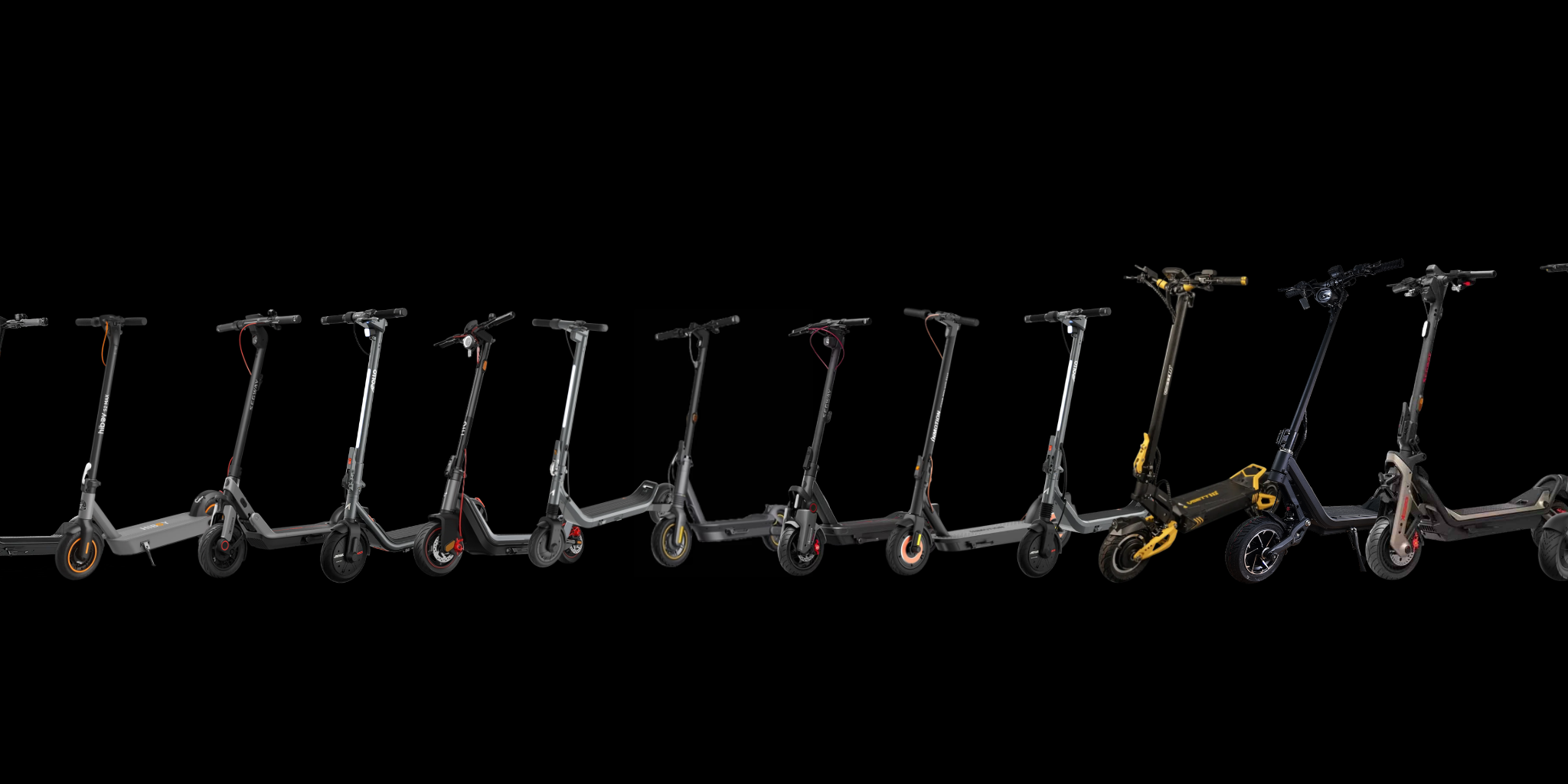




The Truth About Budget Electric Scooters: What Riders Actually Need
Nearly 80% of budget scooter shoppers say they plan to replace their car trips with their scooter. That means they’re not looking for a toy, they’re looking for a tool. A secondary transport that saves money every single day.
The engineering challenge of making a great affordable scooter is actually harder than making a great expensive one. Every dollar is a tradeoff. Let’s see how these five scooters made those tradeoffs.

What Matters Most in a Budget Electric Scooter Under $600
No scooter under $600 has everything. You need to find the one with the right compromises for your riding needs. But three things matter for every rider regardless of preference:

The True Cost of Cheap Electric Scooters: Cost Per Mile Explained
Don't just compare sticker prices. Compare cost per mile over time.
$300 scooter, fails at 6 months, 500 rides → $0.60/ride
$549 scooter, works for 2+ years, 2,000 rides → $0.27/ride
The "cheaper" scooter costs more than twice as much per ride when you account for lifespan. Factor in warranty terms and the real total cost looks very different.
Top 5 Best Budget Electric Scooters of 2026 Ranked by Value and Performance

GoTrax GXLV2 Review: $300
Best Cheap Electric Scooter for Beginners
The Gotrax GXL V2 is the cheapest functional way into electric scooting, period. Thousands of reviews, top seller, and almost certainly the first result when you Google “cheap electric scooter.” At 27 lbs, it’s the lightest scooter in this entire video. It’s easy to fold, easy to carry, easy to bring on a bus.

ESG reviewed the GXL V2 in multiple budget roundups. The honest assessment: 250W motor won’t handle hills, the smallest battery in this comparison, 8.5 inch solid tires transmit every crack and pebble, and you need to kick it to 2 mpg before the motor kicks in.


NIU KQi 100P Review: $350
Best Budget Electric Scooter for First Time Riders
NIU is famous for selling millions of electric mopeds in China. The KQi 100P is their entry-level scooter, and it has one party trick that matters more than any other spec: a 17-degree rake angle. It’s one of the steepest lean-back angles ESG has ever measured on any scooter. If you’re a first-time rider, this geometry keeps the scooter tracking straight even when your inputs are shaky.

ESG confirmed a 17.6 mph top speed and the fastest 0 to 15 mph acceleration in its price class. Front suspension and 9.5 inch air-filled tires (both rare at $350) delivered noticeably better comfort. The limitation: only 300W. On ESG’s standard 10% grade hill test, it made it, but very slowly.


Hiboy S2 Max Review: $450
Popular Budget Electric Scooter on Amazon
Hiboy is the brand you’ve seen everywhere on Amazon with thousands of reviews. The S2 Max steps up from the base model with a larger 48V11.6Ah battery and 10 inch solid tires. The honest assessment: it’s competent and unremarkable. It works. It won’t surprise you.

The 500W motor is adequate, better than the Gotrax’s 250W. The 10 inch diameter tires help roll over bumps better than 8.5 inch. But no suspension, no app, IPX4 splash resistance only, and braking that is functional but does not inspire confidence. At about $450, you’re close enough to $549 from the Segway E3 Pro. The question is, what does an extra $100 buy?


Segway E3 Pro Review: $599
Best Budget Electric Scooter for Commuting
CNET awarded the E3 Pro an 8.3/10 and an Editors’ Choice Award, calling it “the best entry-level electric scooter for commuters.” It has 10 inch tubeless tires, 256 RGB ambient lighting under the deck, dual elastomer suspension (front and rear), Apple Find My, turn signals, and headlights. It makes you feel like you’re edging into premium territory without paying the premium price.

The range reality:
Segway claims 34 miles in ECO mode, but that’s at 9 mph with a 165 lb rider. CNET’s reviewer only got 15 miles real-world. The dual elastomer suspension handles light bumps well (rubber bumpers are reliable and leak-free) but doesn’t have the travel of coil spring suspension. Watch for the familiar Segway quirk: parking mode auto-locks the throttle after a few seconds of stopping.


Apollo Dash Review: $549
Best Budget Electric Scooter 2026 Under $600 for Power and Features
The Dash runs a 600W Bosch motor peaking at 1,200W, that's more than double the Gotrax and significantly more than every other scooter in this lineup. It sits on a 48-volt battery architecture where nearly every other scooter at this price runs with 36V. Higher voltage means less current for the same power, less heat, less stress, more consistent speed as the battery drains. You know that sluggish feeling at 50% battery? That's a 36V problem.

The Dash offers the full Apollo Signature feature set: dedicated regen braking lever, Ludo mode for peak power, the Apollo Beam stem light for 180° visibility, your phone as a full cockpit display through the Apollo app, and Apple Find My. IP66 full dust and water jet protection. 9.5-inch flatproof pneumatic tires. Lifetime frame warranty; this is a first at this price point. The same platform as the $2,800 Phantom Stellar, a premium performance scooter, scaled to $549.
The deliberate tradeoff is no suspension. The engineering budget went into the 48V architecture, the Bosch motor, and IP66 sealing. For the median 2-mile urban ride on paved streets, the flat-proof tires handle the job. If you need suspension, the Apollo Go at $849 is the next step.

Best Budget Electric Scooter 2026: Which One Should You Choose?
The cheapest scooter isn’t the one with the lowest price tag, it’s the one with the lowest cost per mile over the years you own it. The Gotrax gets you riding. The NIU is the safest first scooter. The Hiboy and Segway are solid safe choices in the middle. But if you want the best motor, the best electronics, and the best weather protection under $600, the Apollo Dash builds in features you’d normally find on $2,000 scooters and backs it with a lifetime frame warranty no competitor at this price matches.