
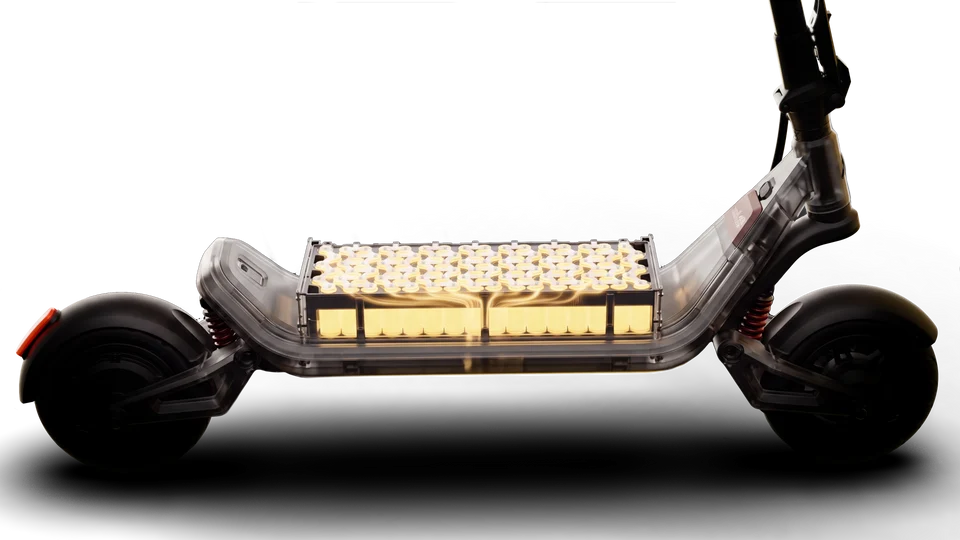
This is part II of a two part series on scooter batteries. Part I, Electric Scooter Batteries (mostly). Why Lithium Ion? is recommended reading.
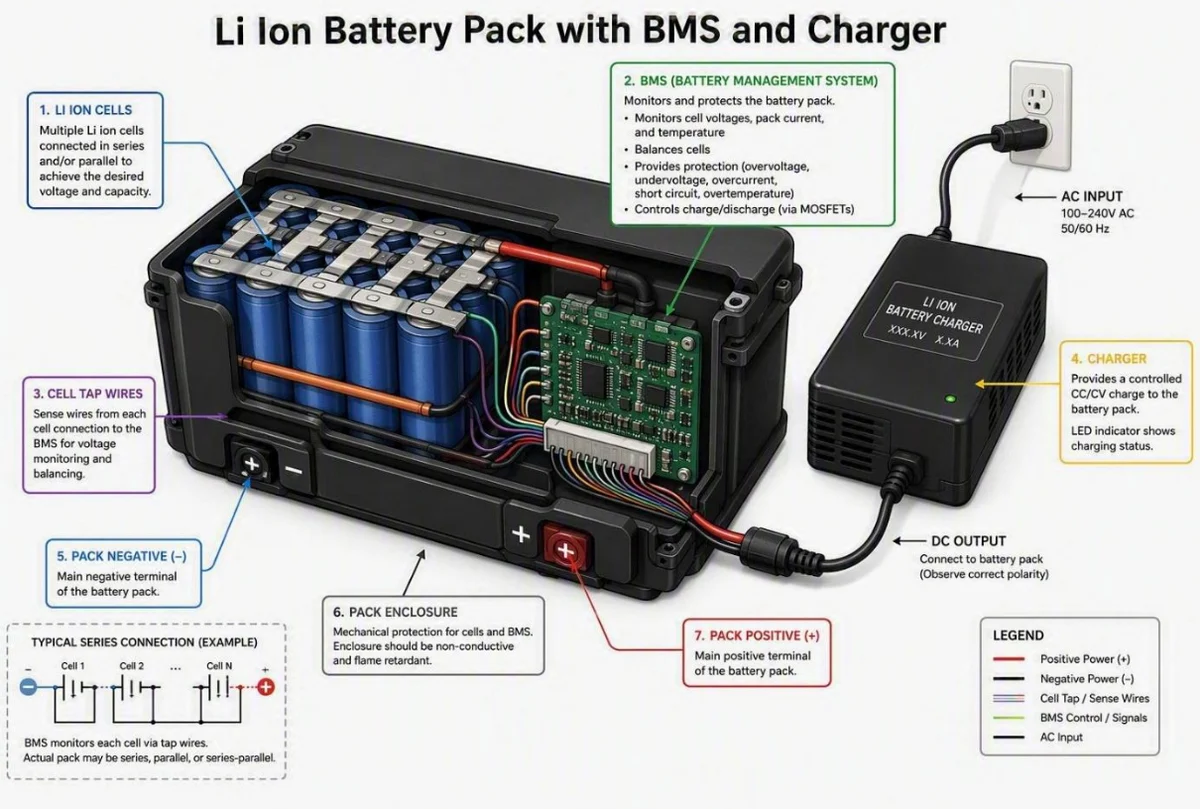
What is a Lithium-Ion Battery System?
A lithium-ion battery system has three main parts: the battery array (the cells), the battery management system (BMS), and the charger. How well these three work together shapes the battery's performance, lifespan, and safety. Good charging and storage habits matter too.
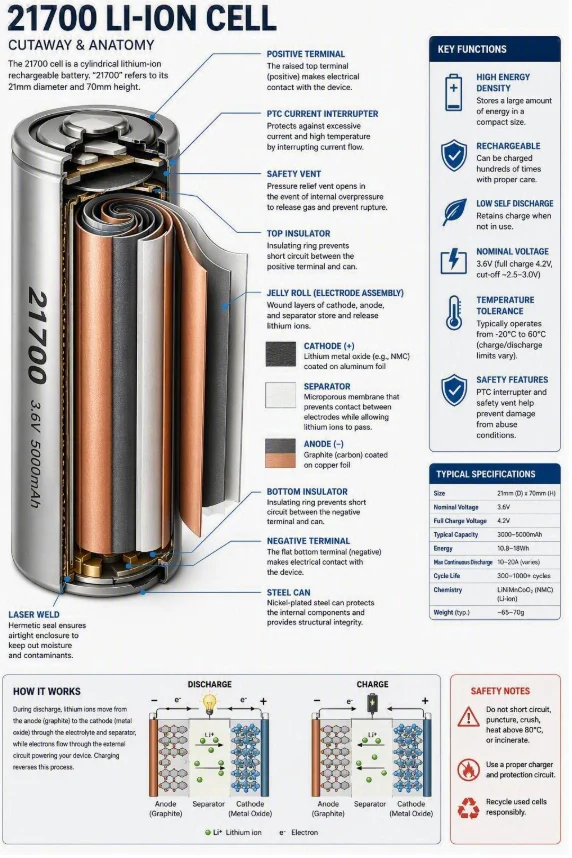
The battery array is composed of a group of interconnected individual cells. In modern high quality scooters (also e-bikes and automobiles) 21700 Li Ion Cells are used. The 21700 is a standardized cylindrical lithium-ion rechargeable cell.
-
Size – (named for its shape) -21 mm diameter and 70 mm length with the 0 indicating cylindrical shape
-
Nominal Voltage - 3.6V
-
Full Charge Voltage 4.2V
-
4500 to 5000 Ah capacity
-
Continuous discharge: about 10 to 20 A for most cells, with some high-drain cells rated higher
-
Discharge cutoff: 2.5 to 3.0V. Draining a cell below this level can damage it. The BMS is designed to stop discharge before that point.
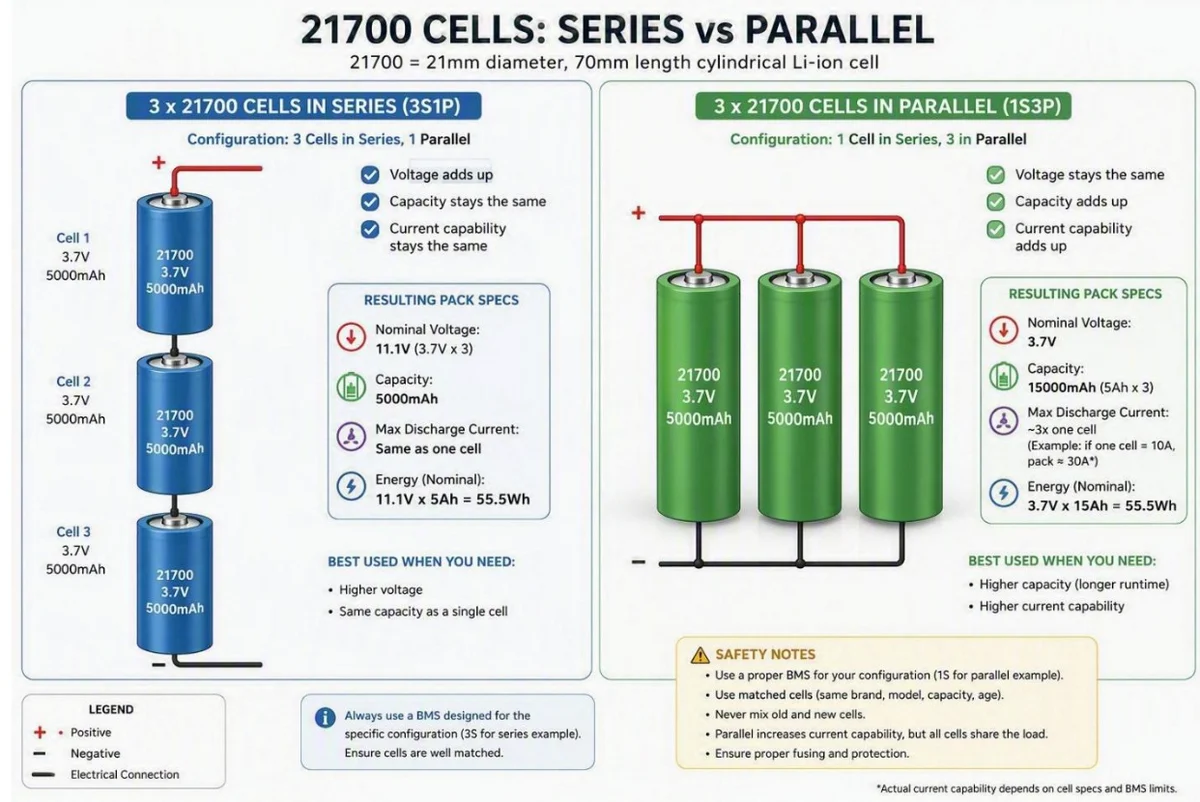
Individual cells are connected in series to increase the voltage, with groups of series connected cells connected in parallel to increase the capacity in Amp Hours of the battery pack as well as the current delivery capability.

In this example, 13 cells in series produce a 48V pack, and three of those strings in parallel produce 13.5Ah. The Apollo Go Stellar uses a 48V, 13.5Ah battery. At its 2,000W peak output, each cell in a 3-parallel pack carries roughly 14A, and less at cruising speed.
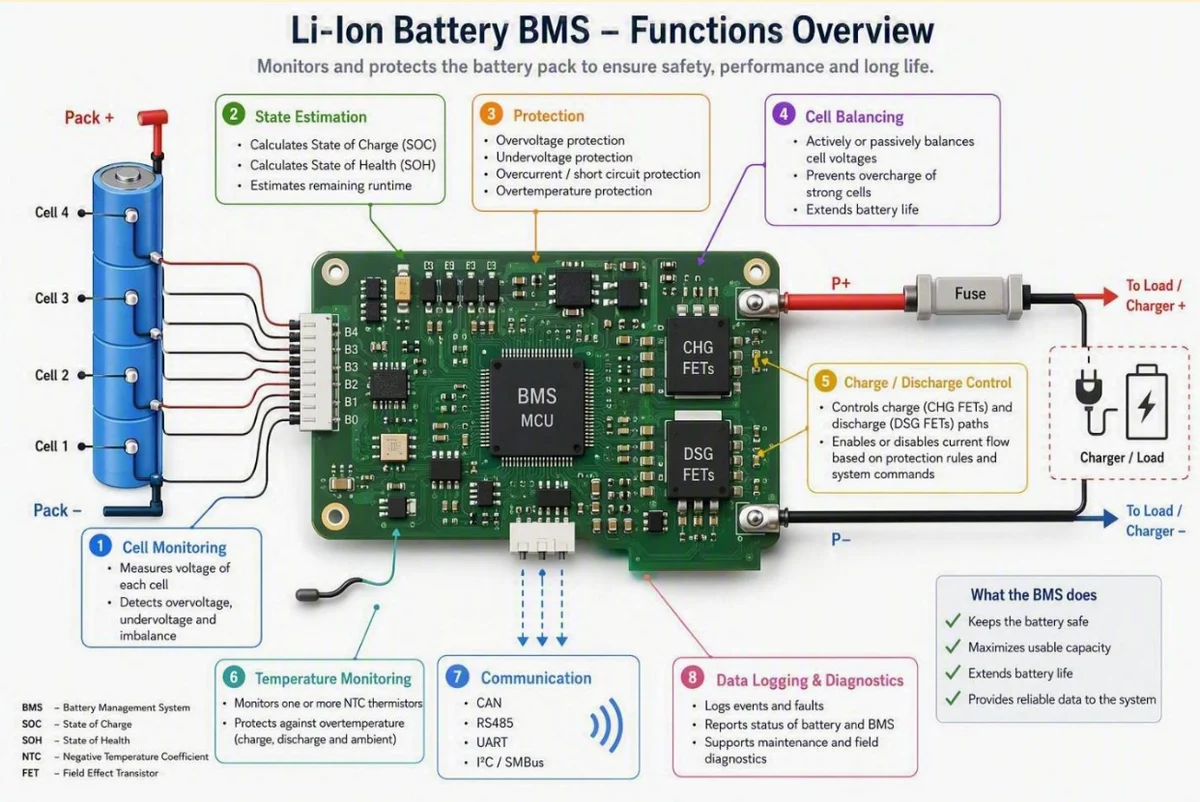
The Battery Management System
BMS is an electronic component that is used to ensure optimal charging, discharging, and protection for the battery array. In electric scooters the BMS is integrated into the battery pack. Without a BMS, lithium-ion batteries are unsafe and prone to rapid degradation. A well-designed BMS not only prevents catastrophic failures but also extends the lifespan of the battery.
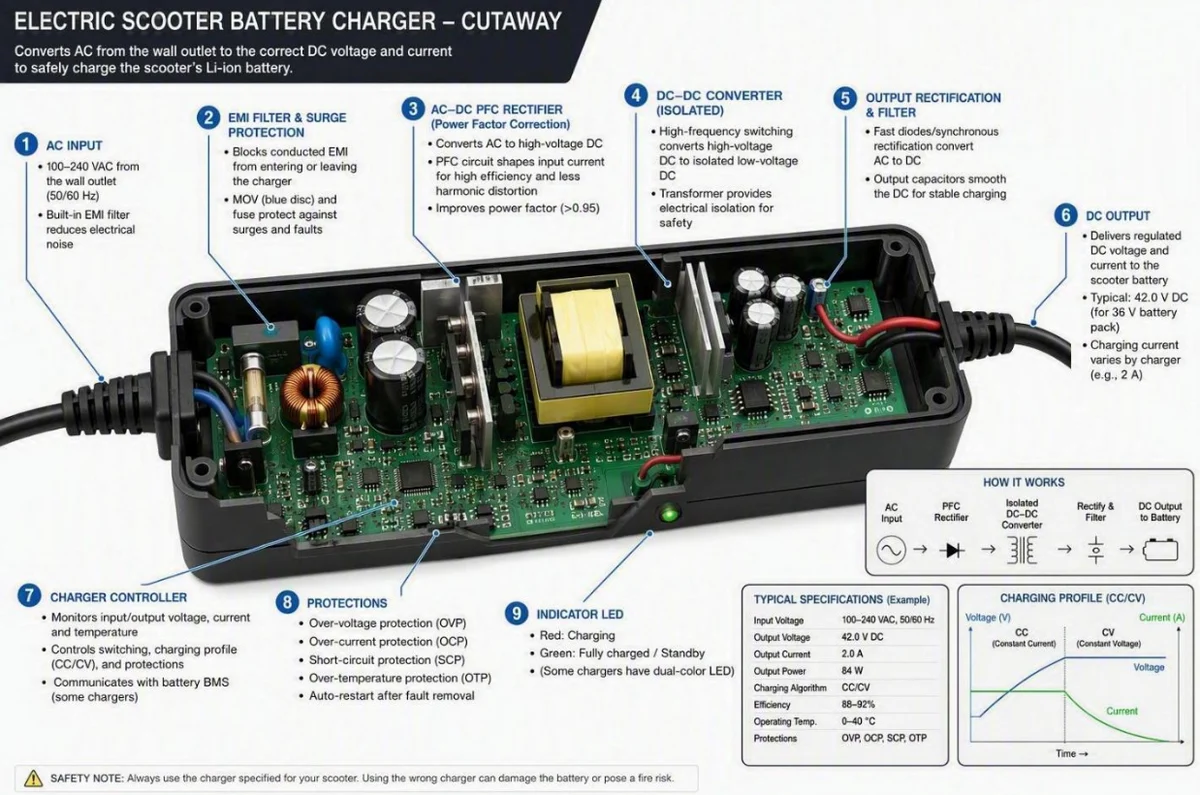
Battery Charger
The battery charger converts AC line voltage from a receptacle into DC voltage which is currently limited to not stress the battery array. In the illustration above, this charger is currently limited to 2 Amp and voltage limited to 42 Volts. This would be suitable for a 36-volt scooter. 36 volts is the nominal voltage of the battery array, however the maximum rated fully charged voltage for the cells in that array would be 42 volts. Chargers need to be matched to the battery packs they are charging. Not only voltage and current, but also the battery chemistry type is important.
Rapid Chargers
Rapid chargers are those in which output the same voltage but have greater output current limits can be sourced for electric scooters. As the name implies, these chargers decrease the charging time required to charge a battery pack.
There are three caveats to be understood with these chargers.
-
Faster charging shortens the life of the battery array, if the current rate is too great for the battery pack and the BMS does not effectively limit it, risk of damage or even fire can result.
-
Only use chargers recommended by the Original Equipment Manufacturer.
-
UL safety testing and certification covers only the scooter and the supplied charger. It does not cover aftermarket chargers or rapid chargers.
Variable Level Chargers
Variable level chargers allow charging the battery pack to a less than fully charged state. They accomplish this by outputting a lower voltage than the maximum rated fully charged voltage of the battery pack. The principal value to this is extending battery pack life at the expense of some range. There are caveats here as well.
-
Even with lower voltage charging, if the current rate is too great and the BMS does not effectively limit it, risk of damage or even fire can result.
-
Only use chargers recommended by the Original Equipment Manufacturer.
-
UL safety testing and certification covers only the scooter and the supplied charger. It does not cover aftermarket chargers or rapid chargers.
Avoiding Fires -
One of the extreme failure modes of a Li Ion battery pack is fire. Li Ion fires are nasty, even as fires go. They burn very hot, emit a lot of toxic smoke and are extremely challenging to extinguish. As shown above there are a lot of safety measures put in place to minimize the chance of fires with Li Ion battery packs. Yet some fires do take place on occasion with serious repercussions. As a consumer, how can you determine if your scooter is well engineered and the power supply matched such that safety is maintained? Can you trust the product’s safety? This is where UL certification comes in.
UL Certification
UL Certification is a step that a manufacturer of high-quality scooters will obtain. All Apollo Scooters are UL 2272 Certified. UL (Underwriters Laboratories) is an independent safety science organization. A UL 2272 certification means the scooter’s entire electrical system (battery, charger, and drivetrain) has passed rigorous testing for electrical safety, including resistance to overcharging, short circuits, and other failure modes that could cause lithium battery fires or explosions. Some scooters may solely carry UL 2271 certification. This certification only covers the battery pack and not charger and rest of the electrical system. UL 2272 certification now is required for electric scooters in certain localities and locations.
Scooter Battery Protection and Maintenance
Are scooter battery systems perfectly protected and maintained by the electronics? Does the rider have a role to play? Given the protection systems, within 21700 cells, the BMS, the Charger, and often the scooter controller, all with UL certification, aren’t these battery systems foolproof? There is a saying “nothing is foolproof, because fools are so creative and ingenious”
There are some best practices that will not only ensure safety is maximized but also increase the service life of the Li Ion battery pack.
Critical Safety Related Practices
Failure to adhere to these practices may result in damage to a battery pack or worse a battery pack fire. In most cases the BMS and other safety features will prevent catastrophic results. However, it is never a good idea to have to depend upon a safety feature to prevent failure when prudent use could have avoided the situation.

1. Keep water away from the battery pack and all electronics in the scooter.
Apollo scooters are IP 66 rated. IP 66 means the scooter is dust and water resistant but not waterproof! Avoid prolonged exposure to water, riding through deep puddles and certainly avoid immersion. Water is conductive and corrosive. It does not play well with electrical devices. Water can short out a battery pack and bypass the protections provided by the BMS. Most battery packs are fairly water resistant on their own, but don’t rely upon this. If water intrusion into the scooter is suspected, open it up and make sure the battery pack area (as well as the controller) is dry.
2. Do not substitute aftermarket electrical components into your scooter.
This especially applies to battery packs and chargers. OEM battery packs are expensive. Less expensive seemingly similar packs are often available particularly from Chinese sites. These packs, however, may not have well-matched quality cells which will limit service life or even proper BMS which can present a fire danger. An incompatible controller can present a demand to a battery pack that exceeds its safe operating limits. The BMS may prevent damage in this case, however this is not something that is prudent to rely upon. Further substitution invalidates the UL certification of the scooter.
3. Store and charge your scooter in near room temperature dry conditions when possible.
Li Ion cells have reduced performance as temperatures are near freezing. Charging them under freezing and below conditions can damage them or even cause combustion. Operating the scooter at low temperatures is not ideal, but charging under such conditions should always be avoided.
Storing at high temperatures above 90 degrees, especially when fully charged advances the aging of the battery pack.
4. Best practices to extend service life of Li Ion battery packs.
There are more subtle best practices for getting the greatest longevity out of Li Ion battery packs. In most cases not following these will not be catastrophic. Hence, they are recommended more than, “must follow” instructions.
5. For long term storage store the scooter between 80% and 50% charge.
heck it at least monthly as batteries will lose some charge naturally and there maybe some slight electrical drain on the battery even when the scooter is turned off. Make sure it is turned off and not “parked”. Ideally fully charge the scooter and then ride it until the battery level hits 80% to put it away. This will allow the BMS to balance the cells before storage.
6. Do not rapid charge the scooter unless it is really necessary.
Rapid charging the battery packs accelerates wear on the batteries over a standard charge rate.
7. Avoid deep cycling the battery packs.
Keeping battery packs at a charge level between 20 and 80% will almost double the life of the cells. This can be difficult to accomplish on the charging side but using the Apollo App or similar it is fairly straight forward to end rides prior to depleting to a level below 20%. If charging to 80% about every 10th charge, charge to 100% to allow the BMS to balance the cells.
8. Allow the battery pack to cool down after a ride and before charging.
At least a half hour over an hour even better.
9. Do not charge to 100% many days or weeks before riding.
Batteries degrade during storage if charged to 100%. If the scooter is near or below 20% after a ride, and it will not be ridden for many days, consider charging it for an hour or two to get the level up, and finalizing the charge shortly before a ride. This is particularly important during hot summers when a garaged or outside stored scooter is going to be in hot temperatures.
10. Please do not read this as a warning of impending doom and gloom.
Quality unmodified electric scooters are not fire waiting to happen. They are engineered with many safeguards. The battery packs will last a long time even if charged to 100% and run down to 20 often, and stored at 100 percent for weeks, etc. This is really about getting the most out of them. Pay attention to the critical stuff and if the mood strikes you extend the life of your battery system with the best practices to extend service life. Most importantly enjoy the ride!